

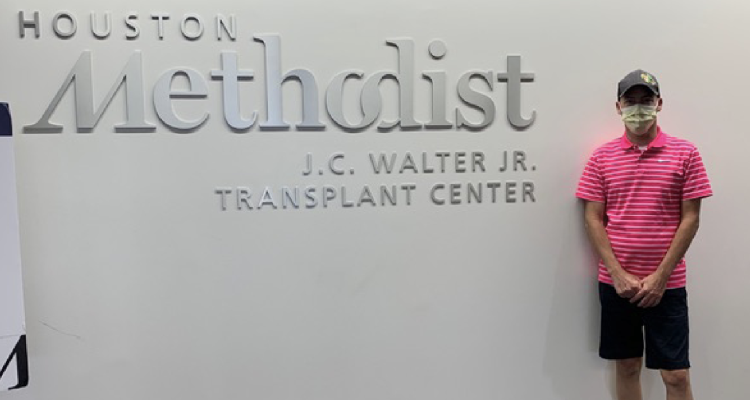
by Clint Huff
It’s never easy humbling oneself and asking for help. Health challenges are often fought alone during the sleepless nights, the cold medical offices, frequent emergency department visits, and lonely trips to the laboratory for blood draws.
I, John Clinton “Clint” Huff was born in December 1984 in Tyler, Texas. At the age of nine I was diagnosed with Juvenile Diabetes Type I. Diabetes had yet to become the epidemic it is today. Technology and science were limited in the treatment of diabetes. The battle for survival was just beginning.
As a pre-teen I remember, the number of times I experienced hypoglycemic (low blood sugar) emergencies was immense. My mom, Cindy recalls, “There were so many devastating times where Clint was found unresponsive and I would quickly check his sugar, force candy and glucose gel into his mouth when he was having a seizure and his jaws were locked.” My twin sister, Cady McKeever, recalls how frequently she and my mom would fight to bring me back from the brink of death and hearing our mom pray, “Lord, just let my baby make it.”
I attended Lindale High School, and was very active, traveling often to sporting events and livestock shows. This coupled with changing hormones during adolescence proved to further challenge the management of my diabetes. Glucose levels fluctuated frequently, increasing the number of seizures related to low blood sugar and battling severe headaches from high blood sugar.
After graduating high school, with more knowledge and my hormones regulated, it seemed there was a “break” in the battle. Glucose levels were much more stable and the number of low blood sugar complications declined significantly.
After high school, I moved and worked in various places in Texas, Louisiana, and Oklahoma.
During the peak of my career, I started experiencing diabetic retinopathy complications. I experienced hemorrhages in the back of my eyes. Doctors began giving me injections in my eyes to control the bleeding. In 2018, I had a retinal detachment in my right eye, requiring surgical repair.
At the age of 36, I began getting tired very easily. Doctors began performing tests and found that my kidney function was declining. Over the next year, dietary adjustments and lifestyle changes were made to preserve my kidney function as much as possible.
In April of 2020, just as the COVID pandemic was ramping up, I took a camping trip to Oklahoma with some friends. On the last day of the trip, I became very ill. I drove myself home and contacted my doctor, who advised me to go straight to the emergency room. I can recall how the emergency department was crazy; everything was blocked off due to the pandemic. The hospital would not allow visitors to come in with patients, so my parents had to drop me off and watch me walk into the emergency room alone.
My kidney function had declined, and I had a peritoneal dialysis port placed in my abdomen. Two weeks later, I started dialysis and another battle began.
My dialysis schedule was intense. I was hooked up to a machine for nine hours a night. The frequent lab and doctor appointments made it impossible to continue to work. I made the choice to have a transplant and was listed as a transplant candidate at Houston Methodist Hospital.
After fourteen excruciating months of dialysis, I had a kidney and pancreas transplant on June 27, 2021. Over the next two months, I faced challenges adjusting to anti-rejection medications and pancreatitis.
This transplant was a blessing. It restored my kidney function and pancreas. I no longer had to manage diabetes through glucose checks and insulin pump therapy. I was able to study abroad in London, Paris, and Germany. The transplant provided a freedom that I had never experienced before.
With the newfound freedom, came significant risks. Anti-rejection drugs, while lifesaving and require lifelong therapies, come with substantial challenges. In June 2024, my pancreas rejected due to unknown causes. I spent two weeks in Houston Methodist Hospital and had to begin insulin therapy again using an insulin pump and continuous glucose monitoring system. Life had changed drastically, again.
The anti-rejection drugs caused me to suffer from hearing loss and forced the use of hearing aids. In October of 2024, I received my first cancer diagnoses. While anti-rejection medications suppress the immune system to prevent organ rejection, this increases the likelihood of developing cancers. Over the next two years, I battled Squamous Cell Carcinomas and Basal Cell Carcinomas, having a total of 33 cancers surgically removed. This left my body from the top of my head to my lower legs scarred.
While facing these challenges, I returned to school at The University of Texas at Tyler and earned a Bachelor of Science degree in business as well as a Bachelor of Science degree in nursing. As president of the Student Nurse Association, I continued to give back to the community, through hosting blood drives, raising funds for various charities, and hosted to The Gift of Life Bone Marrow donor registry. During my academic studies, I battled cancer, a great toe amputation, and in May 2026 my transplanted kidney failed, for unknown causes.
I underwent immediate surgery to have a port placed in my chest for dialysis. I started dialysis in June 2026. During the first month of adjusting to dialysis, I became deathly ill during each dialysis procedure. Doctors determined I was allergic to the dialysate used during dialysis. This led me to have another surgery and an additional port placed in my abdomen so I could attempt another form of dialysis.
I currently undergo dialysis at home for nine hours a night. My family and I are currently working toward getting on the transplant list at Houston Methodist Hospital. Doctors have advised that due to my blood type, my wait time for a transplant is 7-9 years, unless I find a living donor.
My family and I are relying on a gift of organ donation from someone to save my life. Sharing my story through social media, passing out flyers during public events, postings at local business, and through prayer chains, we hope to find a donor quickly.
Becoming an organ donor starts with a simple online application and blood work. My blood type is B+, so my donor would need to be type O or type B blood to be compatible.
There are several programs that assist donors during the process that cover all expenses including travel, medical costs, and lost wages. Most donors are released on “light duty” the day after donation and live completely normal lives, while sharing an amazing experience with someone.
Through all the struggles and battles, my family and I firmly believe that the gift of organ donation is life changing. My older brother, Michael Hall, passed away in October 2024, and because he wanted to honor me, he was a registered organ donor and saved the lives of three people.
Please consider becoming a lifesaver! If you are interested in becoming a living donor, please call 713-441-5451 or visit www.houstonmethodist.org/transplant/living-donor-center/ to take the first step. Additionally, if you would like to partner with my family to share my story and the process of becoming an organ donor, I may be reached at clintjhuff@gmail.com or
903-576-0408.