

by Lisa R. Lowry
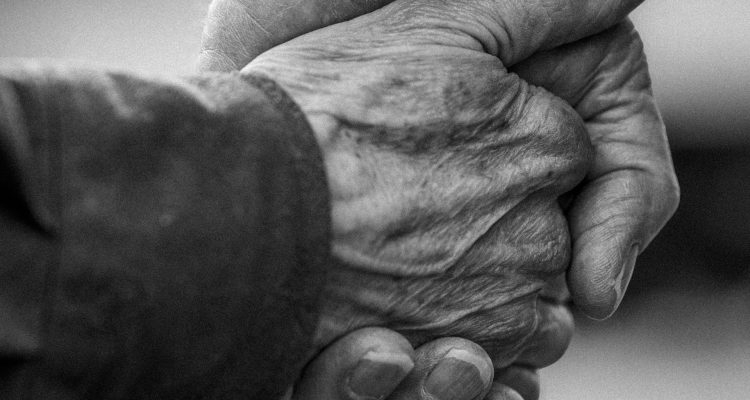
It was a busy day in the office some years ago, which was not unusual. There is a LOT of skin cancer in East Texas to keep a dermatologist busy. What I loved about my private practice was the ability, when necessary, to pivot with the needs of my patients. Having known many of my patients and their families for over a decade, I felt privileged to be participating in their lives. Often couples preferred to be seen together in the same exam room, simply switching places when the time came for their exam. This would inevitably take more time than seeing the two of them in separate rooms, as extra questions and clarifications came from the partner, extra explanations came from me, and the inevitable “catch up” session on what was going on in our lives came from all of us. On this day, I recognized the last name of one such couple, and burst enthusiastically into the room, all smiles, ready for a dose of happiness. Huddled quietly on a chair, red-eyed and head bowed, Kleenex in hand, sat just one. The emptiness of the remaining, unoccupied chair reaching out like a suffocating blanket, smothered my premature joy. This was not a visit to evaluate a skin condition. I silently dismissed the assistant. Without words, I took the unoccupied chair and the unoccupied hand. As her tears fell, so too did mine, quietly acknowledging the loss, but also the beauty of what had been. The pain of lost love cut us both with the sharpness of the finest scalpel.
I have thought a lot about the power of love, and the role it plays in our health and well-being.
There is no escaping the association of LOVE and February, with a nod to Valentine’s Day plastered right in the middle of this very short month. Somewhere in time the idea of love being centered in the heart came to pass. My best guess after minimal research is back around Plato’s time. I suspect this is only when documentation of that concept may have started. Who knows what the earliest human sorts believed. Perhaps in keeping with the theme of the heart, in 1964, President Lyndon B. Johnson issued a proclamation declaring February as ”American Heart Month.” With heart disease the number one killer of Americans, the purpose is to increase awareness of heart disease and stroke, focusing on prevention, education, early detection, and of course, raising money for research and development. This being a health-related article, I would be remiss in not pointing out some of the statistics of heart disease and stroke. According to the American Heart Association, as of 2025, heart disease kills more people than all cancers combined, and all accidental deaths. I think I can stop there; the picture is pretty clear.
What is exciting is seeing the innovations in technology and medicine taking place to lower those abysmal numbers. Those “wearables” are not just for keeping up with the latest social media rage, but can now detect abnormal heart rhythms, blood oxygen levels, and atrial fibrillation. With actionable information hitting medical professionals in real time, sometimes even before symptoms develop, treatment can occur at an earlier stage. An implantable device called Inspire® now addresses one of the sleeping giants causing hypertension, atrial fibrillation, coronary artery disease, stroke, and sudden death: sleep apnea. New techniques in cardiac and brain imaging, including CT scans and MRIs are allowing more noninvasive detection of blocked arteries, more precision in planning when invasive procedures are necessary, and faster decision making in stroke patients. Calcium Scores determined from a quick, noninvasive CT scan are increasingly being used to help predict heart attack risk and guide therapy. Over the past 3-4 years, drugs once confined to the diabetes patient (SGLT-2’s) have become standard of care for those with heart failure, giving these patients a higher quality of life. Patients that have difficulty lowering their cholesterol with statin drugs now may have access to PCSK9 drugs, which can powerfully lower cholesterol, reducing heart attack and stroke risk. TAVR (Transcatheter Aortic Valve Replacement) provides a minimally invasive mechanism for treating heart valves. AI assisted laboratory, scanning, and technology, along with genetic evaluations in some instances, are moving cardiology towards earlier detection, less invasive treatments, and more personalized care.
Science is doing its share of the heavy lifting. American Heart Month also seeks to encourage and educate people about what they can do themselves, including the ever-popular exercise, weight loss, stress reduction, and behavioral modification. It is also an opportunity to discuss disparities that exist in accessibility, research, and early detection and screening. Oh yes, and the unfortunate societal question, “Cash or credit?” for payment.
Technology is also forging its way into other frontiers previously thought to be resistant to statistical evaluation and scrutiny. February is, after all, all about the heart. Would it surprise you to find out that LOVE has been a recent topic in the data driven world of medicine? Recent studies, including The Harvard Study of Adult Development, followed a group of 724 individuals over 80 years, revealing the quality of a person’s relationships as the best predictor of health and happiness. Finally, something that doesn’t require insurance or free weights. Warm, trusting, supportive relationships and social connection outranked money and success (after basic needs were met) as an overall predictor of health and happiness. Loneliness? As deadly as smoking or drinking.
How do you write a prescription for love? It’s Greek to me. The Greeks defined eight different types of love but the description of each is not permitted with my word allotment. Focusing on just a few, let’s start with the (perceived) biggie: EROS. EROS is described as romantic or passionate love. Who can miss this one. In Western societies, this dopamine driven high is the stuff of movies, books, and songs dominating our every waking moment. Rightfully so, it gives birth to babies, ensuring the continuation of our species. Hopefully, as the dopamine wears off, the oxytocin hormone will kick in, and people settle into a more relaxed version of this happily ever after. PRAGMA, or long term, practical love is often used to describe long partnerships that have evolved over time. Having a partner you can trust and count on goes a long way in the health equation. What happens when all is not well? Although divorce rates have declined in the United States, it still affects 40-43% of marriages. 100% of marriages that stay together will succumb to the “death do us part” clause. I’m not being negative, just want to point out that loss of a partner, regardless of the mechanism, may have serious implications for your health. There is a real cardiac condition called Takotsobu, or “Broken Heart Syndrome”, where significant heart dysfunction follows a severe emotional stress, often the loss of a loved one. Loss of social ties, structural support, and activation of stress pathways including cortisol and adrenaline can disrupt immune and cardiovascular function, the gut-brain access, behavior, and mental health, just for starters. Increases in overall risk of mortality follow. This type of love, based on a relationship with one person, while being the stuff dreams are made of, leaves little room for easy recovery when lost. Not everyone finds this type of love. Gratefully, we are not limited to EROS when it comes to improving our health and happiness.
Enter our next two types of love to the rescue, that can be shared with many, and is perhaps not as elusive as EROS. PHILIA, or friendship, may also be long lasting, providing companionship, shared joy and interests, and support. (Not a complete list). STORGE, or the love that exists in families, sometimes described as unconditional, may be profound as well. The love of friends and family can pull us through some of our toughest times. These types of love are often undersold and may go unattended in the shadow of EROS. When well cultivated, they are cornerstones of the healthy, happy life.
AGAPE, the love for others or a spiritual love, often demonstrated by selfless acts, compassion, and charity, gives purpose and meaning to our lives, and rates high on the healthy life contribution scale.
PHILAUTIA, or self-love, (not narcissism), when manifested as good self-care routines including attention to physical and mental health, empower us, keeping the energy flowing and challenging us to enrich our lives.
The authors of the Harvard Study cited above, and others, went on to offer a list of suggestions, as well as TED talks, on how to cultivate better relationships. I thought it quite good, and regret not having enough space here to detail it more.
Some of the highlights include:
• make time for your friendships and family
• reconnect with old friends, but also make new ones
• develop good listening skills
• practice forgiveness
Wishing you a New Year filled with health and LOVE!