

by Paul Swen
The waterfall flowed as normal. The sound of the water cascading into the little river that wrapped around the island created the usual steady, easy current. The sun was just starting to paint the eastern sky in pastel colors. Breakfasts were being served. It seemed like a completely normal, quiet morning. But it was actually anything but. Something monumental had just happened.
“This is incredible,” said the curator, Scotty Stainback. “This is the first time this has ever happened here. It’s kind of amazing, and it’s super important. Man, I’m so proud of the team. People may not understand just how rare this is. But there just aren’t many of this species left. So, having two born here is a serious accomplishment.”
That morning, Kintana, a red-ruffed lemur, one of the most critically endangered species in Africa, became a first-time mother. These primates are indigenous only to the island of Madagascar in the Indian Ocean, where loss of habitat has pushed the wild populations close to extinction. But here, in Tyler, Texas, halfway across the planet, two precious pups were born that will help to protect the species for future generations. “Honestly, I’m honored to be a part of this,” shared Kailee Murphy, one of the Mammals Keepers who works with the lemurs. “This is no ordinary job. Taking care of these animals demands long hours and a lot of physical work, but being part of something like this is super special. Knowing that we are directly helping to prevent extinction makes all the time and all the effort worth it.”
Just up the hill, in a quiet patch of forest, a strange song rises in the breeze. A proud, some might say boisterous, native Texan is stamping his feet to the rhythm of his own tune. Puffing out his chest in a grand display of prowess and strength, an Attwater’s prairie chicken is fully engaged in his mating dance. These charismatic birds once danced by the millions in their native grasslands across the great state of Texas. But now they survive only in two isolated conservation areas of the southern part of our state. And once again, right here in Tyler, monumental work is being done to bring these magnificent birds back from the brink of extinction. Nichole Moore, a supervisor, explains. “This is a really wonderful time of year. They get loud and proud for sure. It’s a treat to see these birds dance and sing and just do what they do.” And thank goodness for the team at Caldwell Zoo, who have been working at the specially built breeding center for many years. Through a partnership with Texas Parks and Wildlife, the team at Caldwell Zoo has released over two hundred and fifty chicks back into the wild.
And this is just two examples of the life-saving work that happens at the zoo every day. Considering all the fun that initiates here, it’s fairly easy to miss the important work being done in this beautiful park. Just about every weekend, some lucky soul is celebrating a birthday in grand style. Guests from near and far are making memories and sharing magical moments that they can cherish for a lifetime. Thousands and thousands of students on field trips explore the pathways and get up-close encounters with some of the most magnificent animals of our planet. Curiosity is inspired, and dreams are launched. “Everyone at this place is passionate about what they do,” explains Scott Maddox, President and CEO of the zoo. “And that’s because everyone who works here is doing important work. Yes, we are dedicated to protecting the wonders of nature, and we’re equally committed to being an asset to our community. We want everyone who comes here to have a good time and a meaningful experience. We may be doing global projects, but our hearts are very much at home here in Tyler.”
When the Caldwell family set up a charitable foundation to support this zoo, it was because they loved children and knew the power of a good education. That legacy lives on in big ways. Education programs are available throughout the year for students from preschool to college. Tens of thousands of elementary students get to explore the zoo every year, free of charge, as part of extensive field trip agreements with area schools. Additionally, high school students can gain valuable experience by joining Zoo Crew, the awesome volunteer program that provides a big boost to student resumés. For those who seek a zoological career, hands-on internships are available to serious university students. Interns come from around the country to work at Caldwell Zoo to launch their careers, and many have the good fortune of getting their first zoo job right here. The current staff of one hundred professionals is a rich blend of locals and dedicated professionals from across the United States. The power of education is woven into the fabric of the organization. The staff takes part in training programs, conferences, and projects to increase their knowledge in best practices for animal husbandry. Additionally, the zoo participates in multiple research projects to benefit the care and understanding of zoo animals.
“We are continually collaborating with our partners in the Association of Zoos and Aquariums, AZA, to further the care of animals and contribute to crucial breeding programs,” shares Scotty Stainback. “We are actively engaged in breeding programs and research projects for SAFE, Saving Animals From Extinction, and SSP, Species Survival Plan. By working with other accredited organizations, we are helping the long-term survival of several threatened species. Most people who visit the zoo would have no idea that we’re engaged in all this critical work, but it’s a part of what we do every day.”
It’s good to know that visiting the zoo isn’t just fun; it helps wildlife around the world. Many of the species that visitors get to see at Caldwell Zoo are part of important research and conservation programs. The lion, African elephant, cheetah, African penguin, Andean flamingo, Attwater’s prairie chicken, giraffe, jaguar, and ocelot are all a part of the Caldwell Zoo family and designated as species in the SAFE program. These species have been highlighted by AZA as needing focused attention for their long-term survival. Scientists and animal experts have developed the Species Survival Plan (SSP) to effectively increase the populations of threatened species. There are currently over three hundred SSP programs in action. Organizations like Caldwell Zoo collaborate on the transfer and breeding of animals to effectively ensure their future.
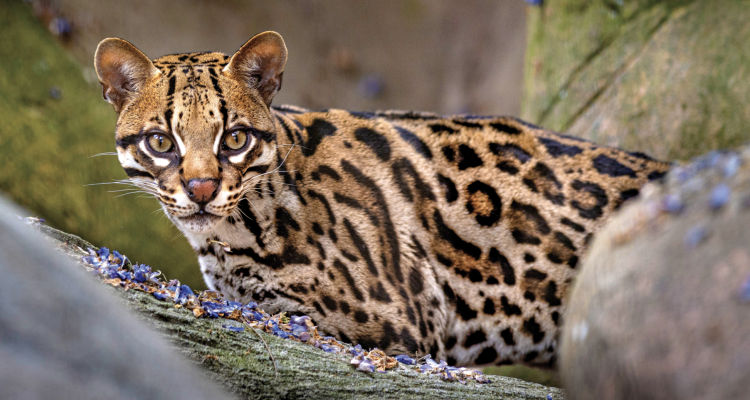
The African lion may be known as the “king of the jungle,” but their populations are in steep decline in their native homelands. So, Caldwell Zoo has been dedicated to strengthening the reign of feline royalty. Lions that were born here are now a part of breeding programs at the San Diego Wild Animal Park. The world’s fastest cat, the cheetah, also faces serious challenges in the wild, but cubs born at Caldwell Zoo are now in breeding programs in Australia and soon to be in Toronto, Canada, as well. Geyser, an African penguin from the Monterey Bay Aquarium, has just joined our colony to do his part for the world’s most adorable flightless bird species. Many of the vibrant, rosy-feathered flamingos at the entrance of the zoo were hatched here and are directly increasing the size of the flock. Xena June, the beloved and regal giraffe, is the newest member of our herd and is a grand ambassador for one of the rarest species of giraffes. The animal team is also currently matchmaking to find suitable mates for Parker, the jaguar, and Liam, the ocelot.
And Caldwell Zoo goes above and beyond. Many animal species deserve our attention outside of the SAFE and SSP programs. Our team consistently partners with other organizations to help protect a wide range of wildlife. Although it may not be immediately apparent during an average visit, important conservation work to save animals from extinction is underway throughout the park. Both species of tamarins, which are the ridiculously cute monkeys living in the new Amazon River’s Edge, are listed as endangered by the International Union for Conservation of Nature. As is the mighty bongo, a rare antelope from the forests of Central Africa. Currently, the team of animal experts is carefully making introductions in hopes of welcoming offspring in the near future. This crucial work isn’t just for mammals. Many of the bird species in the Amazon Immersion and the African Flight habitats face challenges in their native lands. Chicks hatched here are helping to protect the future for generations to come.
But are all of these efforts working? YES!
To see the success of conservation, one only has to stroll along the pathways that wind through the park. Right as you enter, you can spy roseate spoonbills that are as radiant as the famous flamingos. The spoonbills are native to Texas, and many that adorn Caldwell Zoo were hatched right here. Over in the American region, right now, as spring brings warm temperatures, our official state reptile, the Texas horned lizard, is waking up at our custom-built Breeding Center. Thanks to the expertise of the animal keepers and the resources of the breeding center, hundreds of little horned lizards that hatched here have been released back into the wild and are helping to reintroduce these awesome reptiles to areas they once roamed. If you head up to the African Overlook, in the open savanna, you can see Amali and Saba, Grevy’s zebras, the rarest of all zebra species, who were born here. Plus, just last winter, six calves of the magnificent greater kudu were born here. Daffodil, Banjo, Marigold, Olive, Bluebonnet, and Honey are living proof that, when done with expertise and care, conservation works.
This is global work in the truest form. But the mission of Caldwell Zoo is also very local. Yes, the zoo helps wildlife far and near, but serving the local community is the driving force of the organization. Having an entertainment and education venue of this stature benefits all of us. A zoo of this caliber with the variety of educational resources is usually only found in much larger cities. Providing the specially built habitats, the wide variety of diets, the full-time veterinary staff, the educators, and the expert animal care requires a huge amount of resources. This zoo was truly built to be a gift to the community. And that philosophy drives every decision today.
“We are very proud to be at home in Tyler,” continues Scott Maddox. “This is a very special community with deep roots. The zoo has been here a long time, and for those of us who work here, we know how important the zoo is to everyone who visits. We want every visitor to get an excellent experience and for all our friends and family to take pride in what we do. We’re here to help inspire learning, create wonderful memories, and show the world what we can do together.”
As the spring bloom erupts with vibrant color, the zoo is a real representation of potential. What started as a little preschool and children’s zoo now covers over eighty-five acres with life-saving projects and educational opportunities for curious minds of all ages. What could seem like a modest park in a modest town in Texas is anything but. Every day, great work is being done by great people who dare to dream and then bring those dreams to fruition. And the work is just beginning. With more community involvement than ever before, the zoo is planning to do more- more for wildlife, more for our children, and more for the families of East Texas. It’s an exciting time to be right here, right now.
Since its opening in 1953, the zoo has been solely supported by The Caldwell Foundation, established by Lottie and D.K. Caldwell. Over the last seventy years, zoos have evolved considerably. Habitats need to be expansive, beautiful, and absolutely safe for the animals and the visitors. Advancements in animal husbandry have led to carefully planned diets that are packed with nutrition. The ingredients for these come from suppliers all over the country and must be shipped in fresh. Because everyone wants the animals to be fit and healthy, a team of full-time veterinary staff needs to be on location and outfitted with specialized high-tech equipment.
“We need to be ready for everything,” explains Dr. Taylor J. Willis, head veterinarian. “On any given day, we could be treating a big cat, a bird, or the tiniest lizard. So, our hospital needs to be well-equipped to treat all sizes and kinds of animals. If they are too large to come inside the hospital, then we have to go to them and that demands very specialized equipment.”
The hospital is complete with exam rooms, surgical suites, quarantine areas, x-ray equipment, ultrasound machines, even microscopes and centrifuges. Plus, the animal keepers get extensive training that goes well beyond standard college courses. Since Caldwell Zoo believes in sharing the beauty of the natural world, the grounds are treated with as much care and design as an exquisite botanical garden.
Guest expectations have changed, too. Visiting the zoo needs to be more than viewing a few animals. It needs to be a delightful and meaningful experience. So, throughout the park, there are numerous opportunities to interact with the animal keepers and learn about the animals. There are special talks about the different species, signs that share helpful insights, and unique engagements that allow guests to get up close and interact with some of their favorite animals. Since the park covers such a large area, refreshments are necessary. After getting to feed a giraffe or a flock of parakeets, zoo visitors need to be able to relax and feed their own family, too! A visit to the café offers the best views this side of Africa. On top of all of this, it’s wonderful for the community to be able to use the facilities for special occasions. Sports teams, family reunions, business meetings, and any sort of event worth celebrating can come to the zoo and enjoy a setting that will be etched into the memories of every guest.
So, being a zoo, a really good zoo has changed a lot over the years. The everyday expenses to maintain the high standards in animal care, great guest experience, and crucial conservation projects have grown exponentially. Thanks to the generosity of the Caldwell Foundation, the zoo has come this far. Countless memories have been made at the zoo, and priceless work to protect and save wildlife continues every day. And the desire to do more is stronger than ever. To build upon this legacy, last year, for the first time in over seven decades, the community was invited to take an active role in supporting the zoo. A new initiative, Caldwell Zoo’s Donor Circles, was launched to strengthen the organization’s impact and build for the future. It’s no surprise that the community of Tyler stepped up in a big way by becoming members of the Donor Circles. Everyone is invited. For those who cherish the zoo and understand what it does for East Texas and animals around the world, the opportunity to support your zoo is open to all. To learn more about Caldwell Zoo Donor Circles, please visit:
caldwellzoo.org/donor-circles.