

by Paul Swen
Great architecture is the perfect blend of artistic expression and practical use. When done masterfully, it can be a form of engaging art. It takes vision, craftsmanship, and meticulous attention to detail. Architecture can be inspiring, aesthetic, and wonderfully usable. When it isn’t given such care, it can be blasé at best. A beautiful house with no bathrooms wouldn’t be very livable. Or a park that is ugly and boring misses the entire point. But when done just right, creativity, design, and practicality all come into harmony. Great architecture becomes something wonderful to experience. Homes and commercial buildings offer their specific challenges. The designs must take into account how people live or work in the spaces. Now, imagine designing spaces in which some of the occupants would gladly eat the others if given the opportunity. And that is just a fraction of the complications when designing for a zoo.
When the executives at Caldwell Zoo committed to updating the oldest part of the park, the South American area, naturally, if they were going to make changes, they would be done right! Any addition must be absolutely beautiful. Guests need to be able to get up close and really connect with the animals. And, of course, the animals must have habitats that provide for their every need. This isn’t just designing a single-family home. Custom accommodations were needed for over a dozen different inhabitants, each with wildly different demands. And remember that guests would come by almost every day to visit. Considerations needed to be made for the visitors, each different animal, and for the folks who take care of the inhabitants every day. Furthermore, each resident needs private, nighttime quarters, and it’s mandatory to have convenient and trustworthy arrangements for their meals to be delivered quickly and fresh twice daily. It’s a lot to consider.
“We knew we wanted to make the new South American region something truly wonderful–combining beautiful landscaping, interactive guest experience, and, of course, awesome animals,” said Scott Maddox, President and CEO of the zoo. “We also wanted to get our community more involved, so we included really handsome venues for events and education. This new addition needed to honor the magnificence of nature and represent the long-term goals of our organization.” The high standards were set. To pull this off would take a collaboration of insiders and experts who could capture the vision of the zoo’s executives and deliver more than buildings and walkways. The goal was to create a rich experience that captured the essence of the Amazon in a compelling and meaningful way.
Caldwell Zoo had comparable experience with this sort of major construction during the most recent redesign for The African Overlook. After considerable research, BKP Architects P.C. was chosen. So, meetings were held with the architects, zoo executives, animal experts, and the zoo design team to create a united vision that shines on every level. “From the start, we wanted to create an immersive, all-ages experience that would support animal care, conservation, education, and zoo programs,” shared Jón Stefánsson, ASLA , zoo design expert of BKP. “Water is integral to the biosphere of the Amazon and to its biodiversity.” So, we designed the River’s Edge exhibit to flow through the habitats and establish a natural path for the visitors.”
Great consideration was paid to the conservation messaging of the world’s largest rainforest. Every animal species would serve as an ambassador for the region, and all the buildings and enclosures were designed to capture the authentic spirit of the Amazon. “We incorporated reclaimed wood and pre-weathered finishes on the buildings to give the appearance of the materials found in the Amazon River landscape,” explained Joseph Powell, Principal of BKP. “We also paid great attention to the needs of the animals. Every species can always reach a peaceful resting place, and we wanted to make it easy for animals to move from their day and night enclosures. Every habitat had to serve the animals and their keepers and be safe for everyone.”
It would be quite a transformation. The area involved covered over seven acres, with topography that didn’t suit the needs for inclusive visitor engagement and the extensive demands to create a clean, flowing river. Ultimately, thousands of tons of earth would be moved to bring the plans to life. Powell continued, “To avoid the sense of trudging up a long, steep incline, we designed a winding path integrated with the habitats and the landscaping. This created unique viewpoints from different elevations, a lush rainforest vibe, and the chance to see animals in and out of the water.”
Excellent planning was crucial. The process began by working with the zoo’s partners in the Association of Zoos and Aquariums for the right animals. Due to extensive deforestation in the Amazon basin, much of the native wildlife faces serious threats to extinction. Caldwell Zoo wanted to do everything possible to help protect the long-term survival of the species. Scott Maddox explains, “Of course, we want folks to visit the zoo and have a great time, but it’s important for us to share messaging about wildlife conservation and to be leaders in protecting animals for the future.” Giant river otters are incredibly dynamic, jaguars are immediately impressive, macaws are strikingly radiant, tamarin monkeys are jaw-droppingly cute, and sloths are absolutely adorable–all of them face concerning threats in the wild. And those are just some of the species that would become part of the animal family. “We hope to contribute healthy offspring to the population of any threatened species we can,” Maddox continues. “Our mission is to make the future brighter.”
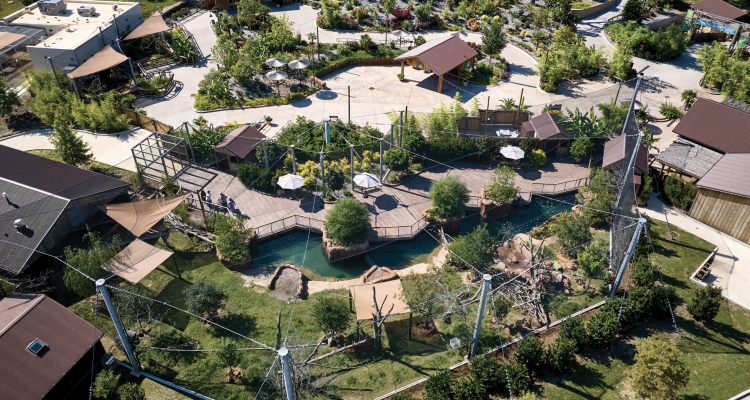
Having worked with several zoos, the team at BKP traveled extensively to learn about the needs of different animals while creating engagement for everyone who visited. A soaring, multi-species aviary was planned that would include a gorgeous variety of birds that lived with capybaras, anteaters, and sloths. It would be a representation of how animals naturally live. And the best part, visitors would enter and be a part of the habitat. The giant river otters needed a large pool along with a firm riverbank. The monkeys required trees to climb and quiet spaces to relax. And the mighty jaguar needed plenty of room to roam. Drawings were made, architectural plans were presented, revised, and refined until every detail was mapped out. Foundations were poured, miles of electrical cable laid, and then there was the plumbing. Plumbing may not register as the most exciting aspect of building a magnificent rain forest inhabited by magnificent animals, but it is incredibly important. This was not the same as a backyard pool. The water had to be absolutely healthy for all of the animals. The chemical balance and clarity had to be perfect. That meant constant, impeccable filtration, and hearing the roar of pumps and motors wouldn’t exactly jive with a stroll through a pristine rain forest. That meant the architectural and construction teams needed to design everything so guests would notice nothing. “The Amazon is famous for lush forests, and the zoo team wanted to create a pristine, tranquil atmosphere,” Steffanson said. “We put a lot of focus on making the entire space feel like you are stepping into South America. Every habitat was designed to present excellent viewing, and thus, we gave special attention to make sure the entire area was quiet and naturally beautiful. The buildings were disguised to blend in, and even inside the habitats, we made sure any barriers didn’t distract from the viewing experience.”
The entirety of Amazon River’s Edge presents areas to explore with meandering paths, surrounded by blooming flowers and lush greenery. Hundreds of plants, trees, and grasses were planted with strategic foresight by the zoo’s botanical staff. The twists and turns provide surprises around every corner and a feeling of exploration. But there are also plenty of places to gather. We want our community to feel like this place is truly theirs,” says Dwight Evans, Chief Financial Officer of Caldwell Zoo. “The zoo has been a cornerstone of the community for decades, and we’re committed to creating even more opportunities for people to connect and make lasting memories here. That’s why we made education and special event spaces an important part of our plans. Now, groups of all sizes can gather day or night and enjoy the unique beauty of the Caldwell Zoo. Every event feels a little more special here.”
The team at BKP made sure each space was distinct, stylistically aligned with the Amazon, and designed to function for the specific uses. That meant the spaces must be fully modern while being aesthetically lovely. River’s Edge Center is striking with a vaulted ceiling, beautiful wood paneling, and interior viewing for animals, like the otters, poison dart frogs, an emerald boa, and even piranhas. It also includes a full catering kitchen and high-tech audiovisual capabilities. Just outside, the Plaza spreads out to allow hundreds of guests to gather, surrounded by the lush, flowering gardens. The quaint Exploration Station is set right in the middle of everything and built for action for camps and educational outings. “Our overarching goal was to make sure this new addition supported all of the zoo’s goals,” reflects Powell. “It was a real team effort with input for animal welfare, guest experience, educational programming, and all the different staff who would work here. Making each aspect work together was definitely a challenge. It’s an enchanting place to explore. It’s designed to inspire. And where else can you go where beautiful birds fly overhead and a jaguar watches over you as you have dinner with friends? It takes intensive planning, engineering, and attention to detail, but we’re proud to add to the legacy of the zoo and contribute to the community of Tyler.”